UK Supreme Court to Review Palestine Action Proscription Ban
Palestine Action challenges government's anti-terrorism proscription. UK Supreme Court grants appeal permission to review the ban in landmark legal case.
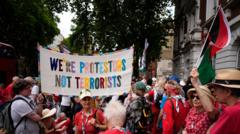
Supreme Court Grants Appeal Permission for Palestine Action Proscription
The United Kingdom's Supreme Court has authorized an appeal concerning the government's controversial Palestine Action ban, marking a significant development in the legal battle over the group's proscription status under anti-terrorism legislation. The decision to allow the challenge represents a critical moment for the activist organization and raises important questions about the application of counter-terrorism powers in the UK.
Key Details of the Palestine Action Ban Challenge
Palestine Action's co-founder has been granted permission to proceed with an appeal against the government's decision to proscribe the organization. This Palestine Action ban was implemented under the UK's stringent anti-terrorism legislative framework, which grants authorities the power to formally designate groups as terrorist entities. The permission to appeal signals that the Supreme Court considers the case worthy of full judicial review, despite the sensitive nature of national security matters.
Understanding the Proscription Decision
The original proscription of Palestine Action occurred under powers contained within the Terrorism Act, legislation designed to prevent organizations deemed to pose security threats from operating within British territory. The government's decision to invoke these provisions against the group sparked considerable debate about the scope of anti-terrorism powers and their application to protest movements. The Palestine Action ban represents one of the more contested applications of proscription authority in recent years, with civil liberties advocates expressing concerns about the precedent it may establish.
The Supreme Court's Role in Reviewing the Ban
By granting permission to appeal, the UK's highest court has determined that the case raises sufficiently important legal questions to warrant consideration. The Supreme Court's involvement indicates that fundamental principles regarding the interpretation and application of anti-terrorism legislation may be at stake. This appeal will not simply rehear the original arguments but will focus on specific points of law that the lower court's decision may have gotten wrong. The Palestine Action ban review process will examine whether proper procedures were followed and whether the legal grounds for proscription were adequately established.
Implications for Anti-Terrorism Legislation
The outcome of this appeal could have broader ramifications for how the UK applies its anti-terrorism powers to activist groups and civil society organizations. Legal experts suggest that the case may clarify important distinctions between legitimate protest activity and conduct that can properly be characterized as terrorism. The Supreme Court's decision to hear the appeal demonstrates that questions about the Palestine Action ban cannot be simply dismissed as matters beyond judicial review, even in the sensitive context of national security decision-making.
What Happens Next in the Legal Process
Following the grant of permission, the case will proceed to a full Supreme Court hearing where both the co-founder's legal team and government representatives will present their arguments. The Supreme Court will examine the specific grounds upon which the Palestine Action ban was based and consider whether the decision-making process complied with legal requirements. This formal review will provide an opportunity to scrutinize the evidence and reasoning that led to the proscription designation.
Background on Palestine Action's Activities
Palestine Action describes itself as a grassroots activist organization focused on raising awareness about Palestinian issues through direct action campaigns. The group's supporters argue that its methods constitute legitimate protest rather than activities justifying proscription under anti-terrorism law. The government's designation of the organization remains highly contested, with the co-founder's decision to pursue an appeal reflecting the group's determination to challenge what it views as an overreach of state power.
Civil Liberties and Counter-Terrorism Balance
The Palestine Action ban case highlights the ongoing tension between legitimate security concerns and the protection of free speech and assembly rights. Civil liberties organizations have monitored the case closely, recognizing that the Supreme Court's decision could establish important precedents about how broadly proscription powers can be deployed. The court's willingness to hear the appeal suggests recognition that these competing interests require careful judicial scrutiny rather than deference to executive decision-making.
Legal Standards for Proscription Review
When reviewing the Palestine Action ban, the Supreme Court will apply established legal principles governing the exercise of executive power in national security contexts. These principles include requirements that decisions be rational, based on relevant evidence, and consistent with statutory purposes. The appeal will test whether the government demonstrated a proper evidentiary foundation for designating the organization as falling within proscribable categories under anti-terrorism legislation.
Timeline and Expected Outcomes
The Supreme Court typically schedules cases for hearing within several months of granting permission to appeal. A decision on the Palestine Action ban review is likely to emerge within a year of the hearing date. The judgment will address specific legal questions raised in the appeal and will either uphold the original proscription or require the government to reconsider its decision. Regardless of the outcome, the case will contribute important legal precedent to this contentious area of constitutional law.