Trump Administration Blocks Entry of Chinese Humanoid Robots
Trump administration enforces ban on Chinese humanoid robots, escalating tech competition. Discover the implications for AI development and US-China relations.
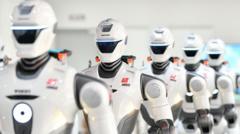
Trump Administration Enforces Restrictions on Chinese Humanoid Robots
The Trump administration has implemented a comprehensive ban targeting the importation and deployment of Chinese humanoid robots within US territory. This decisive action reflects growing concerns about technological supremacy and intellectual property protection in an era where Chinese humanoid robots represent a significant advancement in robotic engineering and artificial intelligence capabilities.
The Global Robotics Competition Heats Up
The United States and China find themselves engaged in an intensifying competition to establish dominance in the robotics sector and artificial intelligence innovation. Both nations recognize that leadership in these transformative technologies will determine global economic and geopolitical influence for decades to come. The robotics industry has emerged as a critical battleground where technological superiority translates directly into economic power and strategic advantage.
Why Humanoid Robots Matter
Humanoid robots represent the cutting edge of robotic development, combining advanced artificial intelligence, machine learning, and sophisticated mechanical engineering. These systems can perform complex tasks, adapt to diverse environments, and potentially replace human labor across multiple industries. Chinese manufacturers have made remarkable strides in this field, producing robots that rival or exceed American counterparts in capability and cost-effectiveness.
Understanding the Ban's Scope and Implementation
The Trump administration's restriction on Chinese humanoid robots extends beyond simple tariffs or trade barriers. The ban encompasses measures designed to prevent technology transfer, protect domestic manufacturers, and maintain American competitiveness in the artificial intelligence sector. Officials argue that such restrictions are necessary to safeguard national security interests and prevent sensitive technological knowledge from reaching foreign competitors.
National Security Concerns
Administration officials have cited national security as the primary justification for restricting Chinese humanoid robots. Policymakers express concern that advanced robotic systems could incorporate surveillance capabilities, facial recognition technology, or other features that might compromise American security infrastructure. These concerns reflect broader anxiety about Chinese technological advancement and the potential military applications of sophisticated robotics.
Impact on American Robotics Industry
Domestic American robotics manufacturers view the ban as protective legislation that shields them from intense Chinese competition. Companies specializing in humanoid robots and artificial intelligence systems stand to benefit from reduced competition and potentially expanded market opportunities. However, some industry experts question whether protectionist measures ultimately help or hinder American innovation in the long term.
Broader Trade War Implications
This ban represents another escalation in the ongoing technological trade conflict between Washington and Beijing. The restrictions on Chinese humanoid robots align with previous Trump administration actions targeting Chinese technology companies, semiconductor manufacturers, and artificial intelligence developers. These measures form part of a comprehensive strategy to reshape US-China trade relationships and reduce American dependence on Chinese technology.
Economic Consequences
The prohibition on importing Chinese humanoid robots will likely increase costs for American businesses and research institutions that previously relied on affordable Chinese robotic systems. Universities, manufacturing facilities, and technology companies may face higher expenses when developing or deploying robotic solutions. Additionally, the ban could prompt retaliatory measures from China affecting American technology exports and services.
China's Response and Counter-Measures
Beijing has responded to American restrictions with concern about protectionist policies undermining free trade principles. Chinese officials argue that advanced humanoid robots represent legitimate commercial products subject to standard international trade rules. The Chinese government may implement reciprocal restrictions on American technology companies operating within Chinese markets, further fragmenting global technology supply chains.
The Future of International Robotics Standards
As the United States and China implement diverging regulations regarding humanoid robots and artificial intelligence systems, questions emerge about future international collaboration and technological standards. The fragmentation of global robotics markets could ultimately slow innovation and increase costs for consumers worldwide. Establishing common standards and regulatory frameworks remains challenging when major powers prioritize competitive advantage over cooperation.
Conclusion
The Trump administration's ban on Chinese humanoid robots marks a significant moment in the escalating technological competition between America and China. While protectionist measures aim to support domestic industries and address national security concerns, they also represent a departure from principles of free trade and open technological exchange. The long-term consequences of restricting Chinese humanoid robots will likely shape the future of artificial intelligence development, manufacturing capabilities, and international technology relationships for years to come.


