Chinese Robots Revolutionizing UK Retail Operations
Chinese robotics firms are transforming UK retail with innovative solutions to address productivity gaps and labor shortages in the industry.
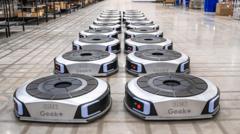
Chinese Robotics Firms Transform UK Retail Landscape
Chinese robotics firms are making significant inroads into Britain's retail sector, leveraging the country's persistent productivity challenges and chronic workforce shortages. This technological shift represents a pivotal moment for retail operations across the United Kingdom, as companies increasingly turn to automated solutions to maintain competitiveness and operational efficiency.
The expansion of Chinese robotics firms in UK retail comes at a critical juncture when traditional supply chain models face mounting pressures. Retailers nationwide are grappling with staffing difficulties that have become increasingly acute since the pandemic, forcing businesses to seek alternative approaches to maintain service quality and delivery capabilities.
Understanding the UK's Productivity Crisis
Britain's weak productivity growth has become one of the most pressing economic challenges facing the nation. Over the past decade, the UK has consistently underperformed compared to comparable developed economies, with productivity gains stalling significantly. This sluggish growth has profound implications for retail businesses attempting to maintain margins while managing rising operational costs.
The retail sector, already operating on thin profit margins, has been particularly vulnerable to these productivity headwinds. Labour costs continue rising, yet output per worker remains constrained by outdated systems and insufficient technological integration. Chinese robotics firms recognize these gaps and are positioning their solutions as practical remedies to these systemic challenges.
Labor Shortages Driving Automation Adoption
The United Kingdom faces unprecedented labour shortages across multiple sectors, with retail experiencing particularly acute recruitment difficulties. Many traditional warehouse and distribution roles go unfilled for extended periods, forcing companies to operate below optimal capacity or redistribute existing staff across multiple functions.
These staffing challenges have created a compelling business case for warehouse automation and robotic systems. Rather than relying on increasingly difficult-to-find human workers, retailers are embracing technological solutions that offer consistency, reliability, and 24/7 operational capability. Chinese robotics firms have capitalized on this demand by offering cost-effective automation systems tailored to retail environments.
How Chinese Robotics Solutions Address Market Needs
Chinese manufacturers have developed sophisticated robotic systems specifically designed for retail logistics and warehouse operations. These solutions typically include autonomous mobile robots for inventory management, automated picking and packing systems, and advanced sorting technologies that streamline distribution processes.
The appeal of Chinese robotics firms extends beyond mere functionality. These companies offer competitive pricing that makes automation accessible to mid-sized retailers that previously considered such investments prohibitively expensive. Additionally, these systems integrate with existing infrastructure relatively seamlessly, minimizing disruption during implementation phases.
Impact on Retail Productivity and Operations
Early adopters of Chinese robotics technology within UK retail report measurable improvements across multiple operational metrics. Order fulfillment times have decreased substantially, while error rates in picking and packing operations have dropped significantly. These improvements directly translate to enhanced customer satisfaction and reduced operational waste.
The implementation of robotic systems also addresses the productivity growth challenge at its root. By removing bottlenecks in warehouse operations and automating repetitive tasks, these technologies allow human workers to focus on higher-value activities requiring judgment and customer interaction. This reallocation of labour creates a more productive overall workforce ecosystem.
The Broader Economic Implications
The rise of Chinese robotics firms in UK retail reflects broader global trends in automation and the reshaping of traditional labour markets. While these technological advancements offer clear operational benefits, they also raise important questions about employment displacement and the future structure of retail work.
Policymakers and industry leaders must balance the productivity gains and competitive advantages offered by automation against the social implications of reducing workforce requirements. Successful integration of Chinese robotics technology will likely require investment in worker retraining programs and strategic workforce planning to ensure displaced employees can transition to emerging roles in the evolving retail landscape.
Looking Forward: The Future of Retail Automation
As Chinese robotics firms continue expanding their UK presence, the retail sector faces a fundamental transformation in operational models and workforce composition. Companies that embrace this technological shift strategically may gain significant competitive advantages, while those slow to adapt risk falling behind more efficient competitors.
The partnership between British retail challenges and Chinese technological innovation demonstrates how global solutions can address local economic problems. As productivity growth remains sluggish and labour shortages persist, the adoption of robotic systems appears increasingly inevitable rather than optional for many retailers seeking sustainable business models in an evolving market environment.


